
Our Products
Rayland Medical's consistent self produced and selected products are guaranteed to provide safety for you and your customers
Our Products
For a medical distributor or equipment brand, OEM handheld ultrasound involves more than putting a logo on the probe.
A commercially useful private-label product may need customized hardware appearance, software interface, examination presets, language, packaging, accessories, documentation, and connectivity. At the same time, not every requested change can be treated as a cosmetic modification because hardware or software changes may affect testing and regulatory documentation.
The first step in an OEM project is therefore to separate branding customization from technical customization.
The most straightforward OEM changes usually involve product identity rather than imaging performance.
Depending on order quantity and project requirements, this may include:
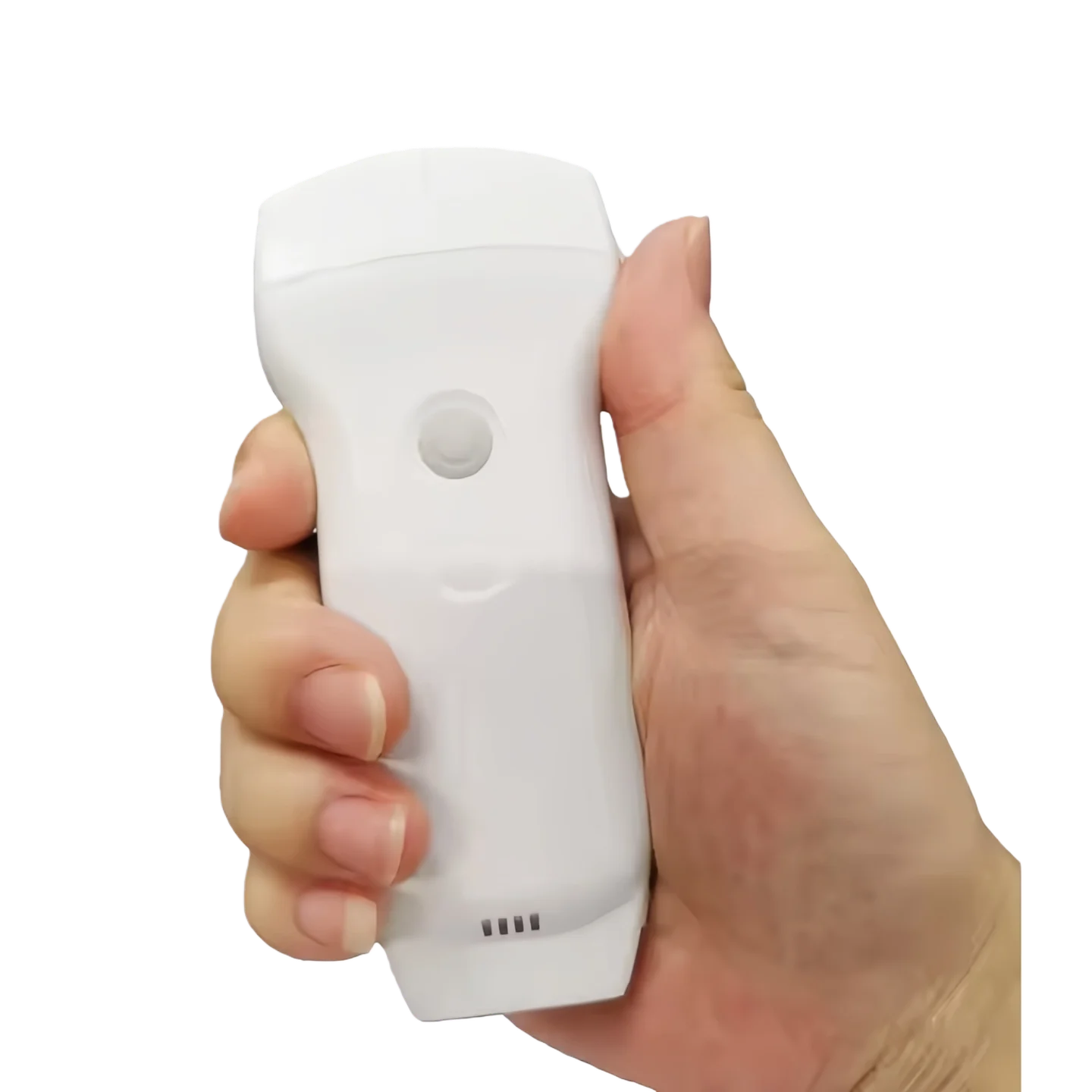
Rayland Medical's current handheld ultrasound is available in white or black and uses an ABS housing.
For a new private-label project, physical appearance should be confirmed using a final production sample rather than approving artwork only on a computer screen.
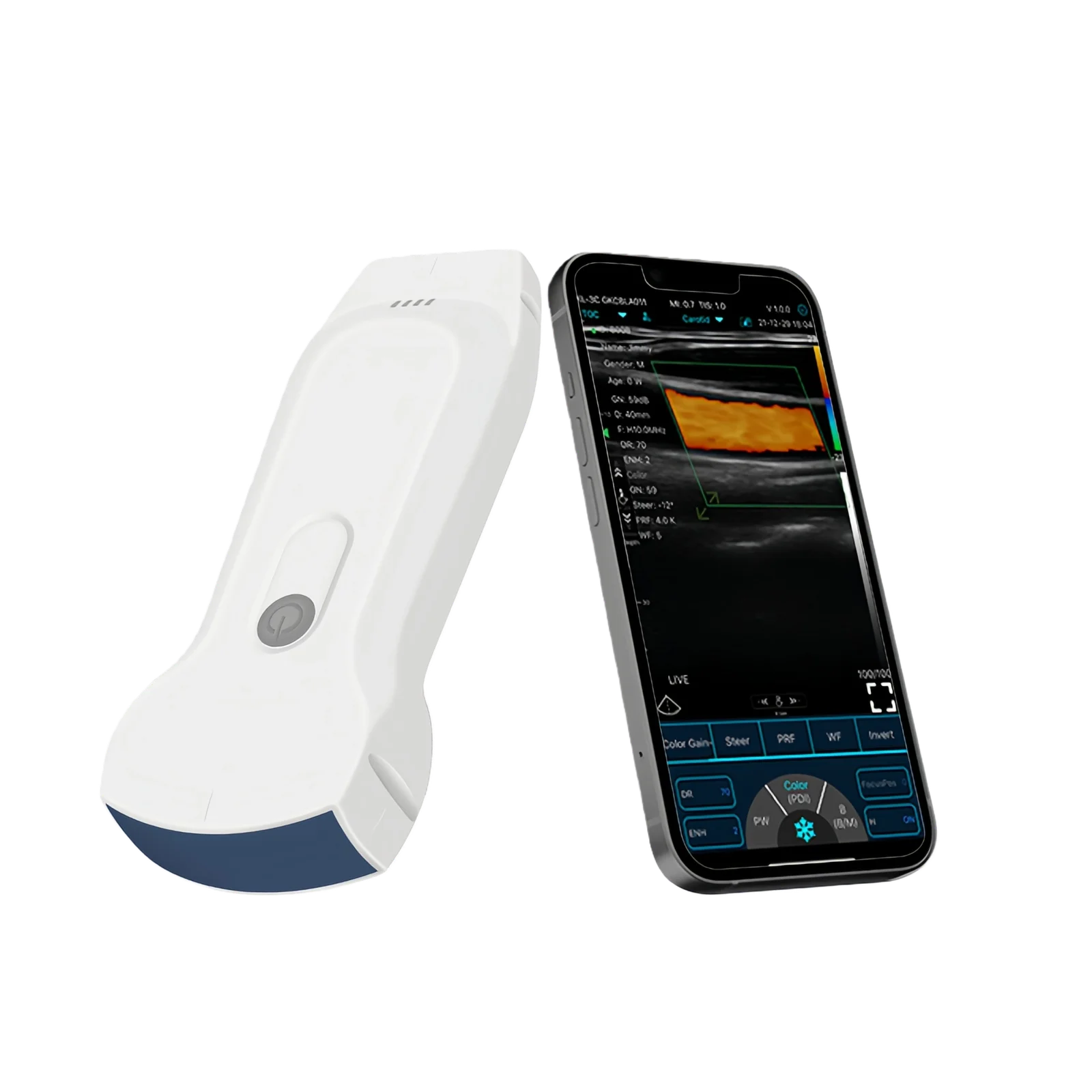
Portable ultrasound is highly software-dependent because much of the user interface appears on a smartphone, tablet, or Windows device.
Rayland's existing handheld platform currently supports English, Russian, Italian, Spanish, Chinese, French, and Portuguese (Brazil).
For an OEM project, determine whether the destination market requires:
Translation should be reviewed by people familiar with medical ultrasound rather than treated as general consumer-product translation.
Different distributors may target different departments.
A vascular-access product does not need to be presented in the same way as a general POCUS device.
Rayland's current platform includes presets covering abdominal, urological, gynecological, obstetric, renal, lung, cardiac, thyroid, carotid, breast, MSK, vascular, nerve, small-parts, and other examinations.
An OEM project can therefore be discussed around a more focused application package, for example:
Emergency package: FAST, lung, cardiac, abdomen
Anesthesia package: nerve, vascular access, lung, cardiac
Primary-care package: abdomen, kidney, bladder, thyroid
MSK package: tendon, muscle, superficial structures
Preset customization should be validated carefully because it influences the actual scanning experience.
OEM differentiation can extend to measurement functions.
Rayland's current software includes measurements for length, area, circumference, angle and trace, as well as selected obstetric, cardiac, velocity, and vessel-flow calculations.
Before requesting additional measurements, identify which calculations are essential for the target specialty.
Software functions that affect clinical calculation or interpretation may require additional verification, documentation, or regulatory review depending on the market.
Therefore, “add this measurement to the app” should not automatically be treated as the same level of customization as changing a logo.
Handheld ultrasound can connect in several ways.
Rayland's system currently supports built-in WiFi and USB and works with Android, iOS, and Windows.
An OEM project should decide:
If the distributor intends to sell the device to hospitals rather than individual clinics, DICOM and image-management requirements may become particularly important.
Rayland's current scanner can save images in JPG and video formats including AVI and MP4, with DICOM support also listed.
For institutional OEM projects, clarify where data needs to go after the scan.
A hospital may require integration into existing image archives, while a mobile clinic may only need local storage and secure export.
These are different product requirements even if the ultrasound probe itself is identical.
Hardware customization requires more careful evaluation.
Rayland's existing 3-in-1 dual-probe format combines convex and linear arrays in one compact housing. The linear side operates at higher frequencies for superficial applications, while the convex side handles deeper examinations and includes cardiac presets.
If an OEM project requires a different frequency range, dedicated probe architecture, footprint, or element configuration, this is no longer a simple private-label project.
Changes may influence:
These projects should be discussed early, before packaging or marketing materials are finalized.
A private-label ultrasound product may also include:
Rayland's current scanner supports USB and wireless charging and includes a built-in 2800 mAh lithium battery with approximately three hours of working time.
For distributors, the accessory package can differentiate product tiers without changing the core imaging hardware.
Handheld ultrasound contains sensitive electronic and transducer components.
OEM packaging should therefore be reviewed for transport protection as well as appearance.
Check:
For international orders, a presentation box that looks good but allows the probe to move freely during transport may create unnecessary warranty claims.
Rayland currently lists CE, FDA, and ISO-related documentation for its handheld ultrasound model.
However, distributors should not assume that every possible OEM modification is automatically covered by existing documentation.
Before changing branding, software, hardware, claims, or intended use, confirm:
Regulatory review should happen before the final packaging is printed.
A useful OEM RFQ should state whether the project needs only:
Logo + Packaging
or a broader package such as:
Branding + Language + Presets + Software + Accessories + Documentation
Rayland Medical's existing handheld ultrasound platform already combines convex and linear scanning, multiple examination presets, Doppler modes, iOS/Android/Windows support, DICOM, and portable battery operation, providing a base platform for discussing different sourcing configurations.
The more clearly an OEM project separates cosmetic changes from technical changes, the easier it becomes to estimate MOQ, development work, sample approval, regulatory implications, and production lead time.