
Our Products
Rayland Medical's consistent self produced and selected products are guaranteed to provide safety for you and your customers
Our Products
Handheld ultrasound is changing peripheral IV access in emergency departments, but it is important to define where the technology adds the most value.
An experienced nurse does not need ultrasound for every visible, easily palpable vein.
The strongest clinical case is difficult venous access (DVA)—patients in whom traditional inspection and palpation are unlikely to produce reliable IV access.
For these patients, placing portable ultrasound closer to trained emergency nurses can reduce dependence on waiting for another department or specialist to perform the scan.
Emergency nurses routinely encounter patients with difficult peripheral access.
Common factors include:
When a first attempt fails, the normal escalation pathway may involve another nurse, a more experienced clinician, an ultrasound operator, or ultimately more invasive vascular access.
Portable ultrasound can move part of that escalation pathway closer to the bedside.
A 2024 systematic review and meta-analysis specifically examining ultrasound-guided peripheral IV placement performed by nurses included 23 studies. Ultrasound guidance was associated with higher first-attempt success, with an odds ratio of 2.95 compared with traditional approaches. The study also reported fewer skin punctures and shorter successful insertion time overall.
Another 2024 meta-analysis focused on emergency nurses concluded that ultrasound-guided peripheral IV cannulation increased both overall and first-attempt success compared with standard techniques.
More recent analysis of emergency-department DIVA patients also found improved first-attempt success with ultrasound guidance.
These findings support ultrasound as a DVA tool—not as a requirement for every uncomplicated venipuncture.
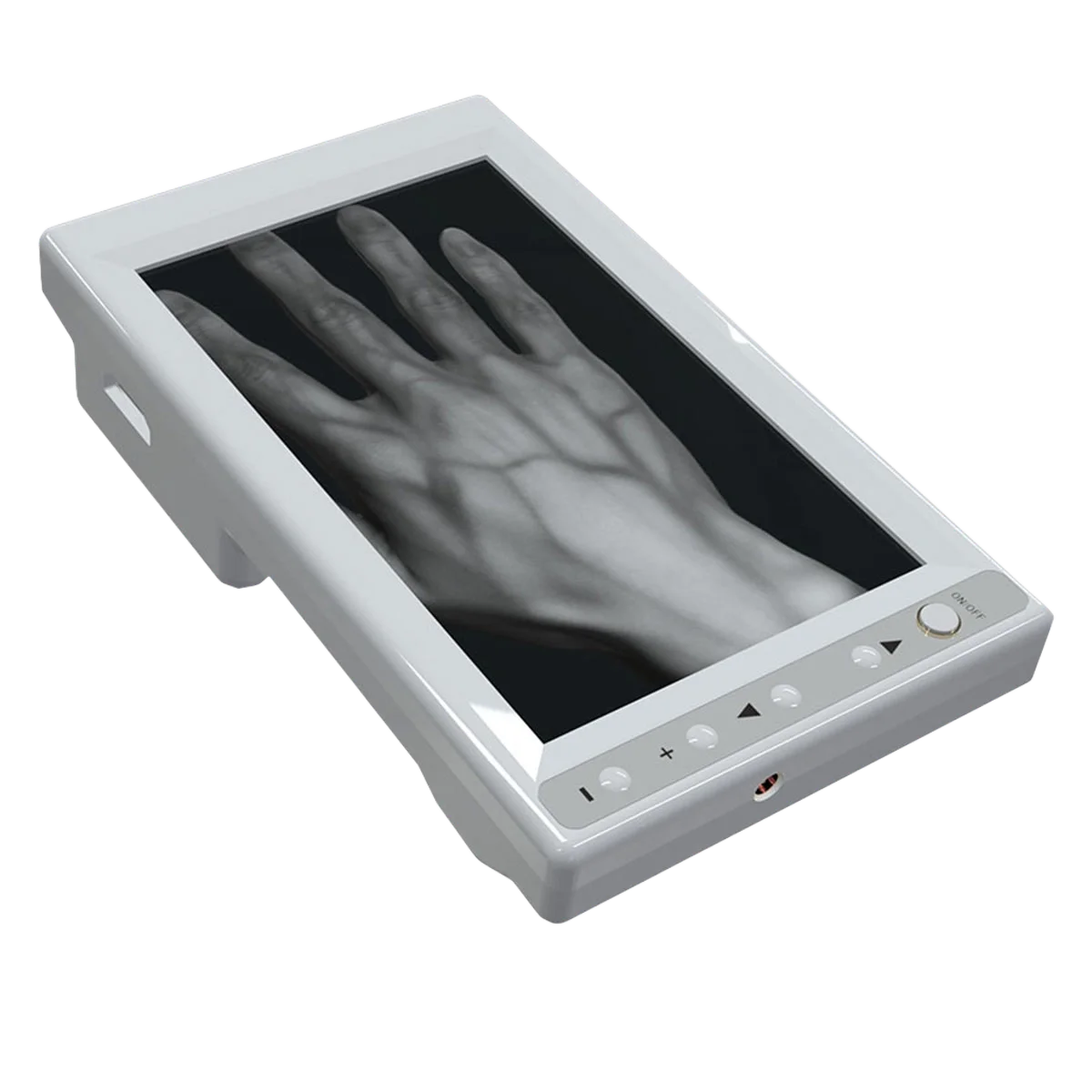
A near-infrared vein finder shows the pattern of superficial veins.
Ultrasound goes further.
With a linear probe, the nurse can identify:
This becomes particularly valuable when the vein is not visible at the surface.
A deep vessel may be completely suitable for ultrasound-guided cannulation while remaining invisible to an optical vein finder.
Traditional ultrasound systems can perform vascular imaging very well, but they are often shared across several departments.
A handheld scanner can remain in the emergency unit and be used when needed.
This reduces time spent:
For high-volume emergency departments, accessibility may therefore matter as much as maximum imaging capability.
For peripheral IV access, a high-frequency linear probe is generally preferred because peripheral veins are relatively superficial.
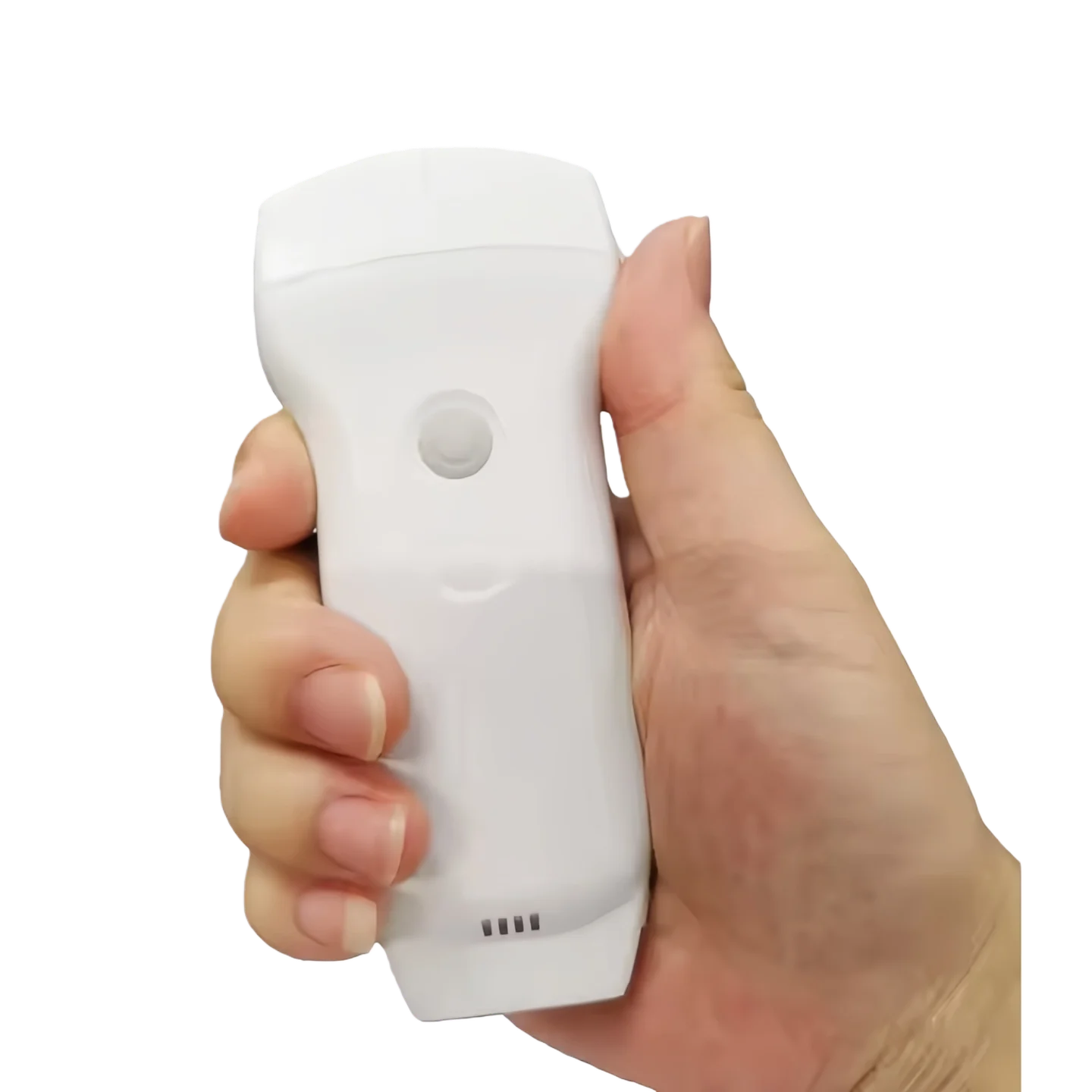
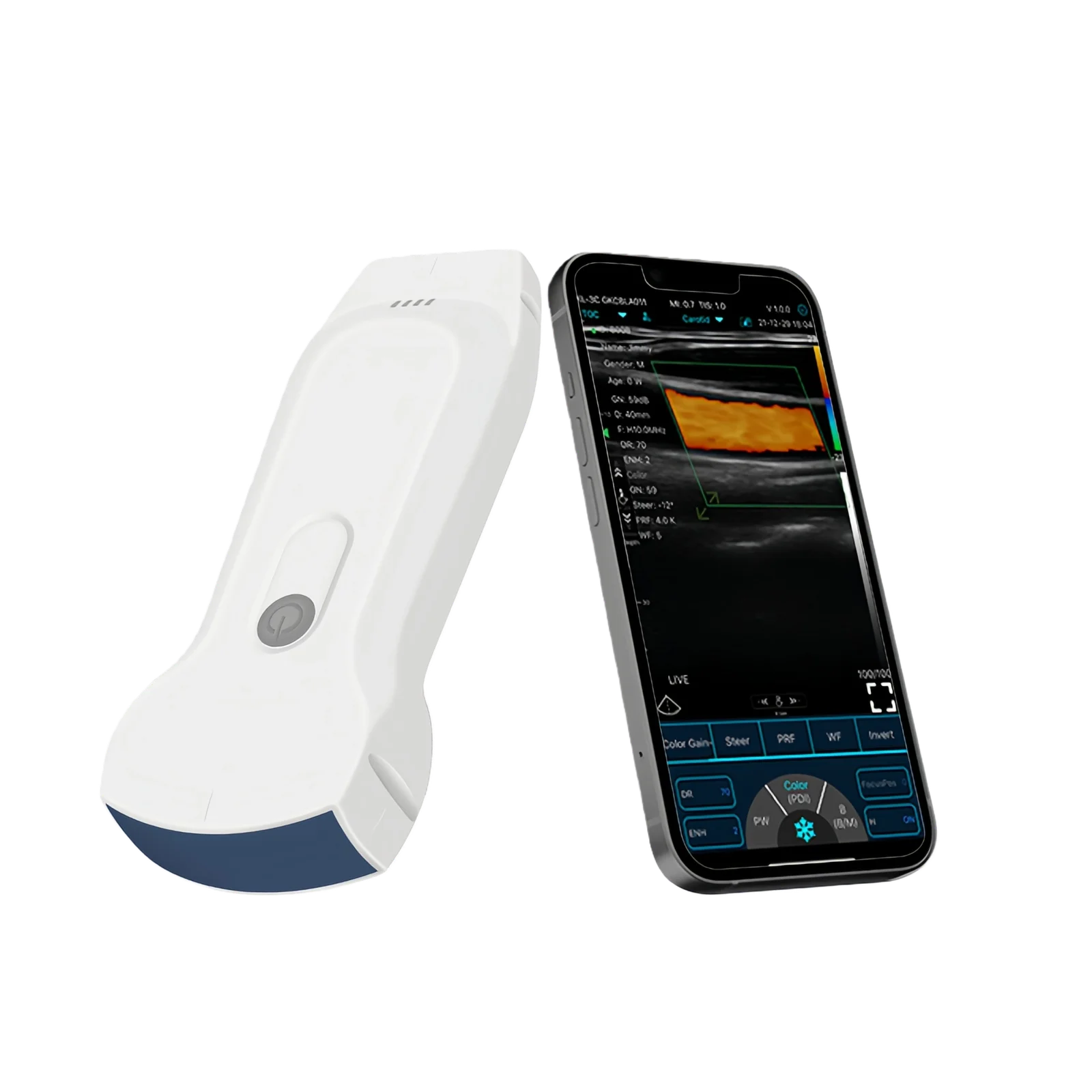
Rayland Medical's handheld ultrasound combines convex and linear arrays in a single device. The linear side operates at listed frequencies of 7.5/10 MHz and provides depth settings suitable for superficial applications including vascular, nerve, MSK, carotid, and small-parts imaging.
For an ER purchasing primarily for vascular access, the linear-probe image should be evaluated before the abdominal or obstetric presets.
A marketing image of a vein is not enough.
During ultrasound-guided cannulation, the user needs to see the vessel and follow the relationship between the needle and vessel.
Before purchasing, evaluate:
A system that produces an attractive static image but responds slowly during needle advancement may be less useful for vascular procedures.
Ultrasound-guided IV access is a practical skill.
Buying handheld devices without establishing training and competency requirements can create inconsistent results.
Users need to understand:
Professional POCUS consensus also emphasizes training, credentialing, cleaning, image storage, and quality review when point-of-care ultrasound is implemented clinically.
This is where handheld ultrasound can improve procurement ROI.
Rayland's current dual-probe scanner also includes presets for abdomen, kidney, lung, cardiac, MSK, nerve, thyroid, obstetrics, and other applications and supports B, B/M, Color, PW and PDI imaging functions.
A device purchased initially for DVA may therefore support other trained POCUS applications.
That does not mean every nurse should perform every examination. Scope of practice, training, credentialing, and hospital policy still apply.
Not for every patient.
If a vein is clearly visible and palpable and the nurse expects straightforward cannulation, conventional technique remains efficient.
Portable ultrasound becomes most valuable when:
standard access is predicted to be difficult, previous attempts have failed, or a deeper vessel needs to be evaluated.
Rayland Medical's handheld dual-probe ultrasound provides a portable platform that can support vascular access as well as broader POCUS applications.
For emergency departments, the procurement objective should therefore be rapid access to ultrasound when standard venipuncture stops being standard.