
Our Products
Rayland Medical's consistent self produced and selected products are guaranteed to provide safety for you and your customers
Our Products
Portable ultrasound is often described as a lower-cost alternative to cart-based ultrasound. Purchase price matters, but it does not provide a complete return-on-investment calculation.
For hospitals, clinics, distributors, and medical projects, the real financial question is:
How much useful scanning capacity does the equipment add for the total cost of owning and operating it?
A handheld device can produce strong ROI when portability allows more departments to perform appropriate point-of-care examinations. It can produce poor ROI when the device is inexpensive but lacks the probes, imaging functions, connectivity, or clinical acceptance needed for routine use.
A traditional cart system may serve one imaging department or move between several rooms.
Handheld ultrasound follows a different deployment model. Several departments can each have access to their own scanner.
Possible locations include:
Research comparing handheld and traditional ultrasound has highlighted portability and lower acquisition cost as important reasons handheld devices can expand access to POCUS.
Therefore, ROI should be calculated per usable scanning location, not only per machine.
Consider two hypothetical systems.
A cart-based ultrasound may produce more advanced images but spend much of the day parked in one department.
Several handheld devices may individually have lower capability but be used repeatedly in emergency, anesthesia, ICU, and outpatient settings.
The economically better option depends on utilization.
Useful metrics include:
The higher the proportion of focused bedside examinations, the stronger the financial case for portable deployment becomes.
Shared ultrasound equipment creates hidden workflow costs.
Staff may need to:
Handheld equipment can reduce some of these steps.
This does not automatically create direct revenue, but it can improve equipment availability and staff efficiency.
A hospital considering ten handheld devices should therefore compare them not only with the cost of ten cart systems, but also with the operational limitations of trying to share a smaller number of carts.
Probe configuration affects ROI significantly.
Traditional ultrasound platforms may require separate linear, convex, and cardiac probes.
Handheld platforms increasingly combine several applications into one or two transducers. ACEP has noted the development of multi-purpose handheld probes intended to cover linear, curvilinear, and cardiac-type applications.
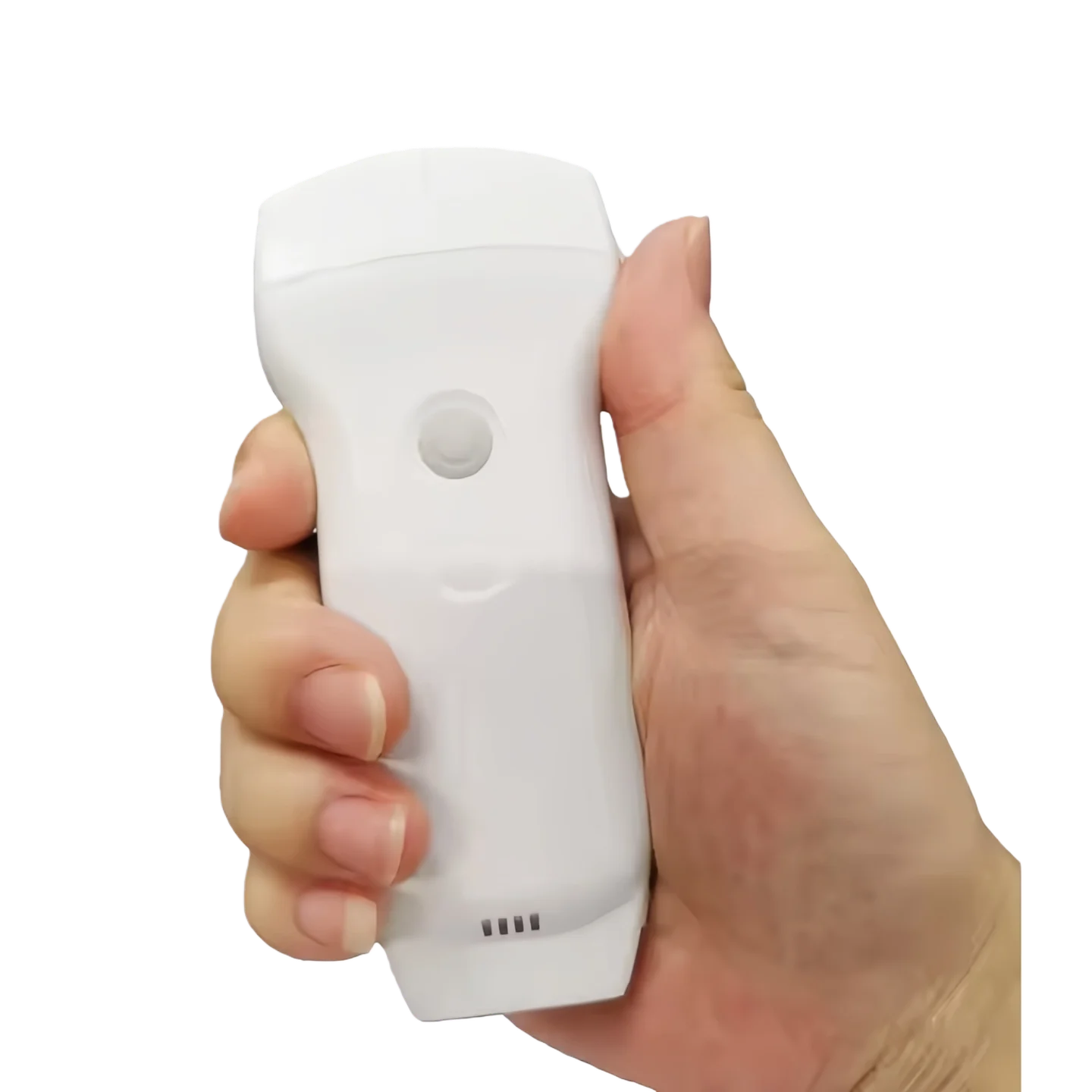
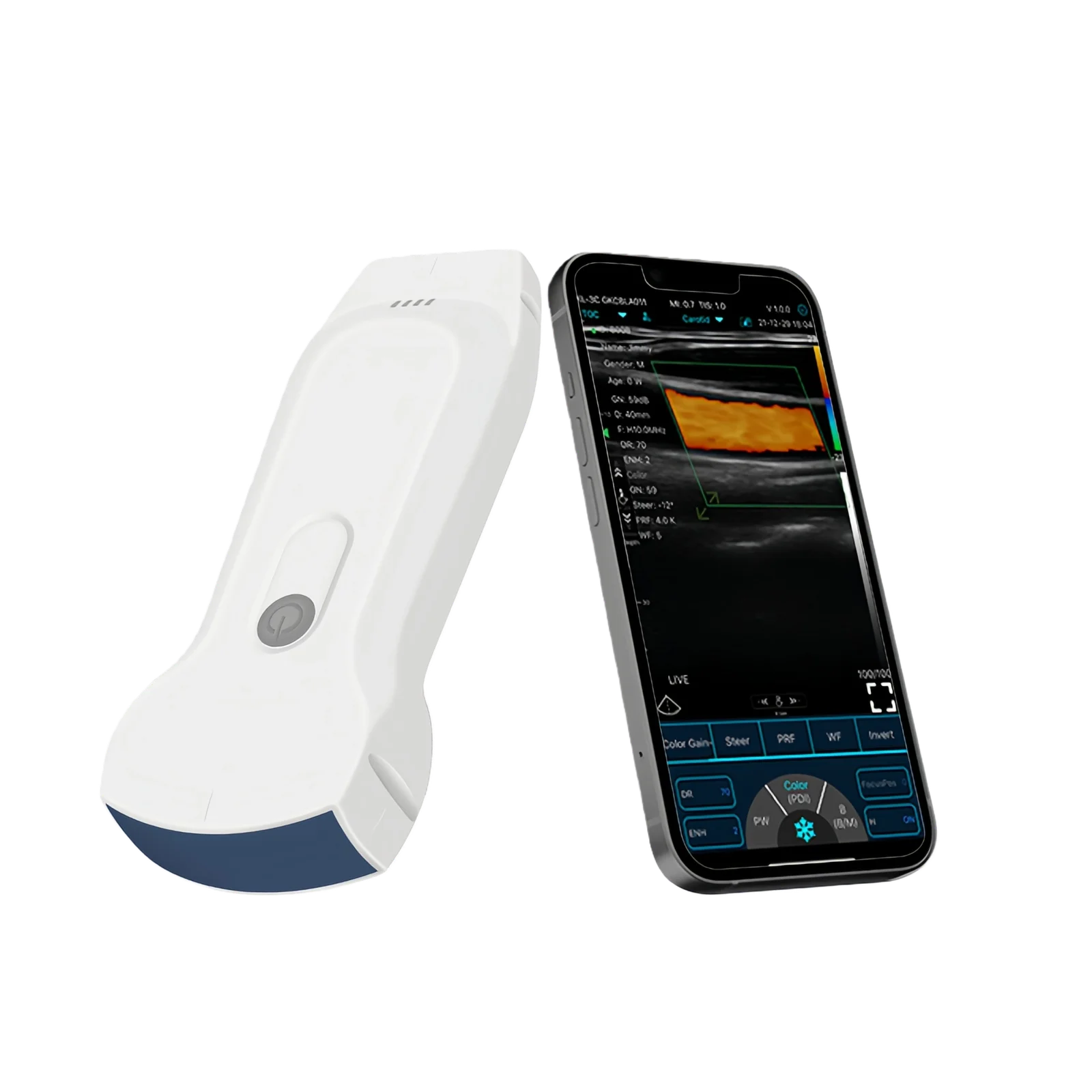
Rayland's current dual-probe scanner combines a convex array and linear array in one approximately 120 g device, with the convex side also including cardiac presets.
For a general POCUS deployment, reducing the number of separate probes can lower:
However, specialty departments may still require dedicated probes, so accessory savings should not be assumed before the clinical workload is mapped.
Some handheld ultrasound systems require a smartphone or tablet.
If the hospital already has compatible devices, this may have little additional cost.
If not, the real acquisition package becomes:
Probe + Tablet/Phone + Charger + Protective Case + Software + Accessories
Rayland's handheld system supports Android, iOS, and Windows, which provides flexibility in how the display platform is supplied.
For procurement comparisons, always price the complete operational package.
Portable ultrasound products can use different software business models.
Depending on the supplier, certain functions may involve licenses, subscriptions, cloud storage, or paid software modules.
Before calculating ROI, confirm:
An inexpensive probe with recurring software fees may have a different five-year cost from a higher-priced device with included software.
A portable system cannot generate ROI while it is charging.
Rayland's current handheld scanner lists approximately three hours of active working time and more than five hours standby time, with USB and wireless charging.
For occasional bedside examinations, this may provide substantial daily availability.
For high-volume departments, the facility may require:
Battery planning should therefore be included in equipment quantity calculations.
Cart-based ultrasound can involve carts, monitors, computers, multiple probes, wheels, batteries, keyboards, and other hardware.
Handheld systems contain fewer physical components, but they are still medical devices requiring appropriate care.
Potential costs include:
Rayland currently lists a 24-month warranty for its handheld scanner, extendable up to five years, with online technical support and hardware repair listed as after-sales options.
For long-term ROI calculations, warranty and repair terms should be compared alongside initial price.
Buying more ultrasound devices does not automatically create more useful examinations.
POCUS depends heavily on operator competence.
Training costs can include:
A department with ten unused handheld probes has worse ROI than one well-utilized cart system.
For implementation, equipment quantity and training capacity should grow together.
Lower-cost equipment is not economical if clinicians repeatedly need to repeat examinations on a higher-end machine.
A randomized study found similar diagnostic accuracy between handheld and cart-based systems for several common POCUS examinations, although cart-based imaging quality was better overall.
This suggests a useful ROI strategy:
Use handheld ultrasound for focused examinations where its performance is adequate, while retaining higher-end systems for examinations that require more detailed imaging.
That is often more realistic than trying to replace every ultrasound platform with one device type.
A practical formula is:
Total Ownership Cost ÷ Number of Clinically Useful Examinations
Total ownership cost can include:
Equipment + Probes + Display + Software + Accessories + Training + Maintenance + Repair
Then compare that with:
Scans Performed + Departments Served + Workflow Time Saved + Procedures Supported
This produces a more meaningful picture than comparing purchase prices.
Rayland Medical's handheld ultrasound provides convex and linear scanning, multiple Doppler modes, broad examination presets, USB/WiFi connectivity, DICOM support, approximately three hours of operating time, and compatibility with common mobile and Windows platforms.
For procurement projects, portable ultrasound tends to deliver the strongest ROI when it is placed close to the clinicians who frequently need focused imaging, rather than purchased simply because it costs less than a cart-based machine.