

Our Products
Rayland Medical's consistent self produced and selected products are guaranteed to provide safety for you and your customers
Our Products
Rayland Medical supplies vein visualization devices for hospitals, clinics, emergency departments, pediatric care, oncology departments, ICU units, infusion centres, blood collection rooms, and clinical venipuncture applications.
Vein visualization devices help medical staff locate superficial veins more clearly before puncture. They are especially useful when venous access is difficult due to age, obesity, swelling, chemotherapy history, poor vascular elasticity, dark skin tone, low blood pressure, peripheral vascular constriction, or emergency conditions. Rayland’s current vein finder products are designed to support real-time vein imaging and clinical venipuncture assistance.
A vein visualization device should be selected according to the clinical environment, patient group, imaging method, display format, working distance, battery performance, mounting method, and department workflow.
For hospitals and distributors, the key question is not only whether the device can show veins. It is also important to confirm whether the product is portable, easy to use across departments, suitable for difficult venous access, and available with the right accessories for bedside, desktop, mobile, or handheld use.
Rayland Medical currently offers portable and screen-based vein finder options, including models with real-time on-skin imaging, multiple colour display modes, near-infrared imaging, and screen-based vein monitoring.
Difficult venous access is common in infants, children, elderly patients, obese patients, oncology patients, emergency patients, and people with poor vein elasticity or swelling. In these cases, repeated puncture attempts may increase discomfort, slow down treatment, and reduce workflow efficiency.
Rayland vein finder devices use near-infrared light and image processing to make vein information easier to identify. The PRO 500/600 and WHITE product pages describe the use of near-infrared light around 850 nm and real-time dynamic imaging to assist venipuncture.
Rayland’s portable vein finder range includes models designed for different clinical use habits.
Vein Finder PRO 500/600
This model is suitable for clinical teams that need colour display options, portable operation, and flexible mounting. The product page lists 10 display colours for PRO 500 and 16 display colours for PRO 600, 850–940 nm wavelength, 1.5-inch TFT colour display, rechargeable/replaceable 2600 mAh lithium battery, 3-hour working time, and 20–25 cm detection distance.
Vein Finder WHITE
This model is suitable for standard clinical venipuncture scenarios where a compact portable vein finder is preferred. The page lists 16 display colours, 850 ±15 nm wavelength, rechargeable 2600 mAh lithium battery, 3-hour working time, and 20 cm ±3 cm detection distance.
Vein Finder VIEW
This model is suitable for applications requiring screen-based vein monitoring. The product page describes a 5.5-inch IPS LCD, HDMI video output, near-infrared non-radiative light, dual wavelength, long battery life, and screen-based enhanced vein imaging.
Vein visualization devices can support a wide range of clinical procedures where vein location and puncture planning are important.
Common application areas include:
The PRO and WHITE product pages specifically identify suitable users such as infants and children, obese patients, patients with swelling, patients with chemotherapy history, poor vascular elasticity, emergency situations, and sudden blood-volume decrease.
Different departments may need different vein visualization formats.
For mobile venipuncture and general nursing use, a compact portable vein finder may be easier to move between wards and treatment rooms. For clinical settings that require clearer visual monitoring or teaching support, a screen-based model may be more suitable.
Before selecting a model, confirm:
A vein finder may be used at the bedside, on a treatment table, in a blood collection room, or in a mobile clinical setting. Rayland’s PRO and WHITE pages state that the devices can be equipped with different working supports, including desktop fixture, desktop placement, floor-standing mobile, and handheld options.
This flexibility is useful for:
For medical distributors, hospital projects, and clinical procurement teams, vein visualization device selection should consider practical use conditions rather than only product appearance.
Important points include:
Rayland Medical provides vein visualization devices within its diagnostic and monitoring product range. The current category includes portable non-radiative vein finder models and a screen-based vein monitor option, allowing procurement teams to compare different device formats in one category.
For project enquiries, Rayland can support product selection based on target department, clinical use scenario, quantity, accessory needs, documentation requirements, and delivery planning.
Vein visualization devices are medical devices, so the final model should be confirmed according to the destination market, intended use, documentation needs, and local procurement requirements.
For a more efficient quotation, provide:
Rayland Medical offers multiple vein finder options for clinical venipuncture support, including handheld portable models and a screen-based viewing model. The product range helps healthcare facilities and distributors select a device according to patient group, department workflow, imaging display needs, and procurement requirements.
Key support areas include:
Vein visualization devices are used to help medical staff locate veins before venipuncture, IV cannulation, blood collection, infusion therapy, and related clinical procedures.
They are especially useful for difficult venous access cases, including infants, children, obese patients, patients with swelling, oncology patients, elderly patients, patients with poor vascular elasticity, and emergency cases.
Rayland’s vein finder pages describe the use of near-infrared light and image processing. Deoxyhemoglobin in veins absorbs near-infrared light differently from surrounding tissue, helping the device display vein information more clearly.
PRO 500/600 includes a 1.5-inch TFT colour display, with PRO 600 offering 16 display colours and PRO 500 offering 10 display colours. Vein Finder WHITE is a compact portable model with 16 display colours and no external screen-style monitor.
Vein Finder VIEW is suitable when screen-based vein monitoring is required. The product page lists a 5.5-inch IPS LCD, HDMI video output, dual wavelength, and enhanced vein image display.
Please provide the target department, intended use, preferred model, quantity, accessory requirements, destination country, required documentation, and expected delivery schedule.
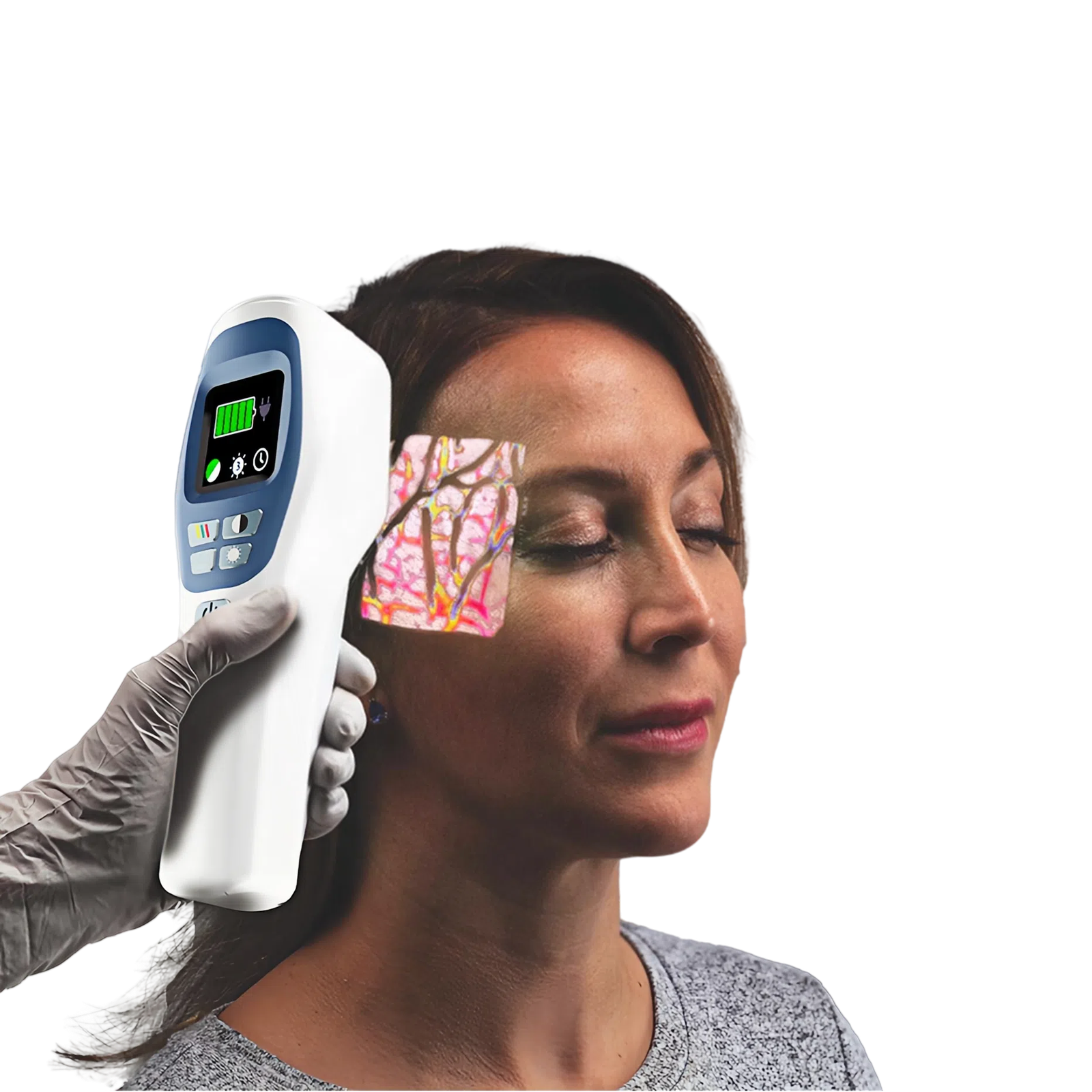
CE certified portable and non-radiactive vein finder offers real-time dynamic on skin imaging, with up to 16 colors display
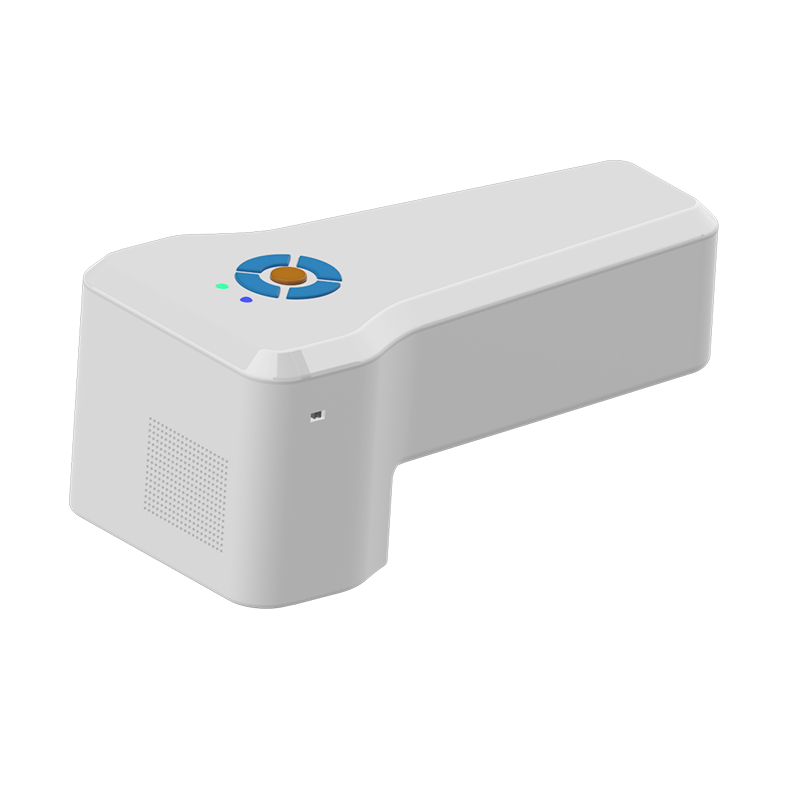
CE certified portable and non-radiactive vein finder offers real-time dynamic on skin imaging, with no screen
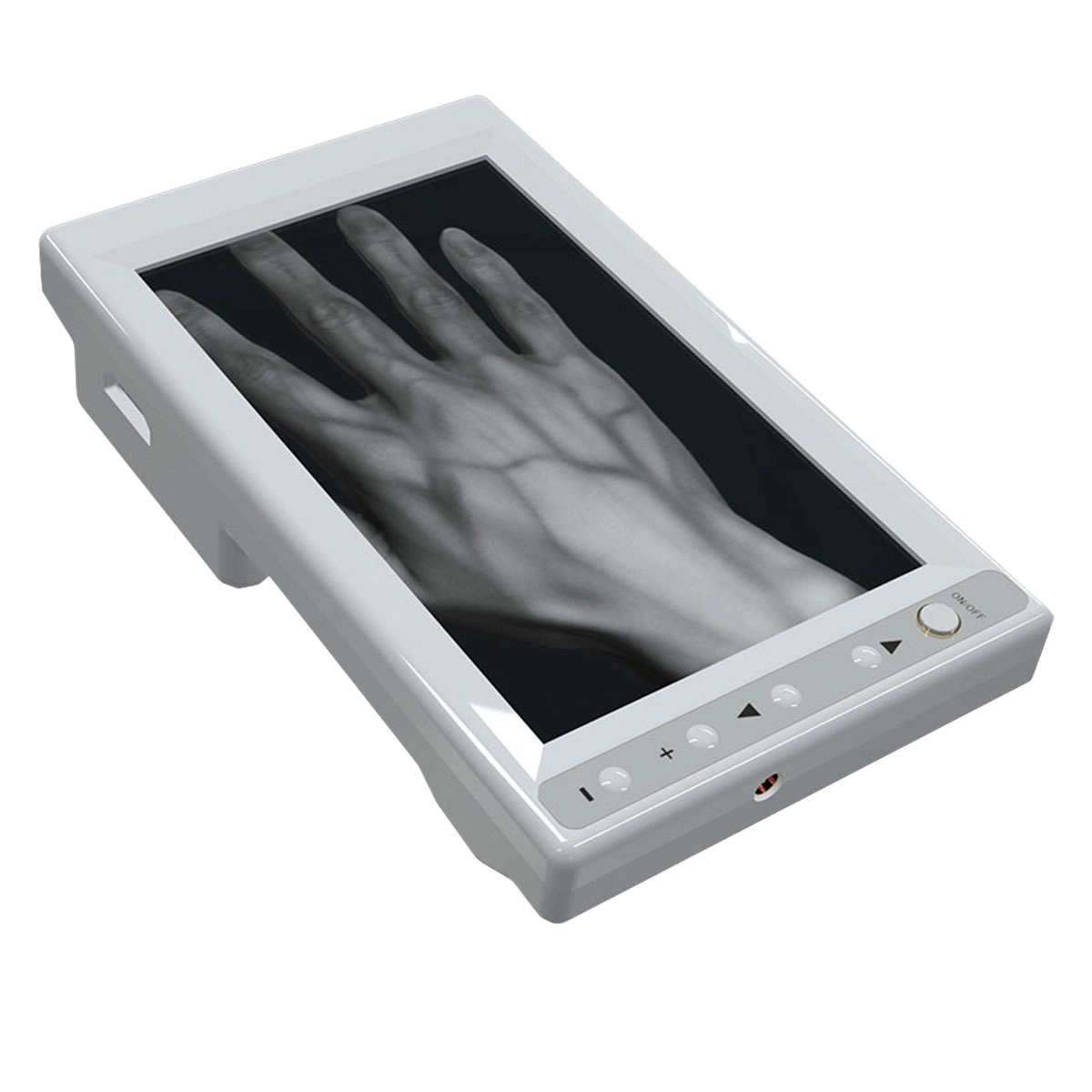
High precision on screen real-time vein monitor